



logo
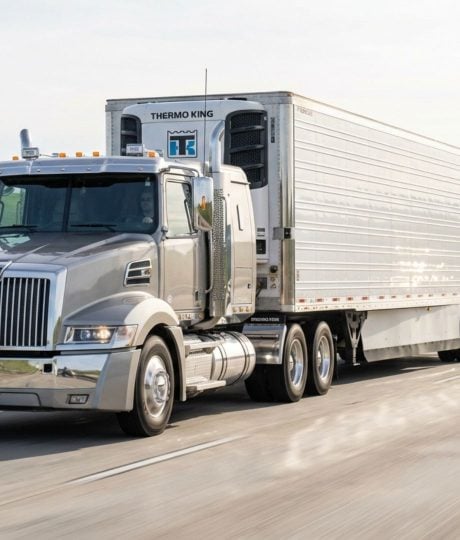
Front view of a white aerodynamic semi-truck driving on a multi-lane highway, with chrome grille and side mirrors visible, rolling through a semi-rural landscape with grassy embankments and trees under a bright, lightly cloudy sky.
trustindex
dot-1

Palletized Cargo Consolidation


Freight consolidation protocols for outbound less than truckload shipments

Outbound over-the-road freight networks utilize consolidation centers to manage small-volume commercial cargo moving to the United States. Less than truckload shipping handles palletized freight requirements that do not fill an entire 53-foot dry van trailer. Standard commercial logistics setups implement a minimum requirement of one pallet per shipment to optimize terminal dock handling efficiency. Over-the-road transport carriers consolidate cargo from multiple commercial operations into a single transport vehicle to stabilize line-haul costs.

Palletized cargo tracking arrays record terminal check-in times at cross-dock facilities. Freight consolidation matches freight class parameters to ensure uniform cargo placement within the vehicle. Outbound commercial routing schedules load-stabilized pallets to maintain cargo integrity during highway transport.

White refrigerated semi-truck with a box trailer and roof-mounted cooling unit, parked on a paved lot under a partly cloudy sky, showing a clean aerodynamic cab and multi-axle trailer setup.
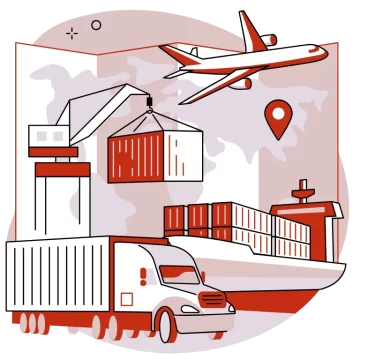
Stylized illustration of global logistics showing a cargo ship with stacked containers, a crane lifting a container, a delivery truck, and an airplane overhead, with a location pin indicating transportation and supply chain movement.
dot-1

National Motor Freight Classification


Technical freight class parameters for transborder cargo verification

Transborder freight shipping lanes utilize the National Motor Freight Classification system to establish transport rates based on commodity density. Commercial shipping operations provide exact package dimensions and total freight weight metrics to calculate precise density parameters. The classification framework groups commodities into 18 distinct classes ranging from class 50 to class 500. Lower freight classes apply to high-density, durable industrial commodities, while higher classes apply to low-density, fragile electronics or machinery parts.

Incorrect freight classification entry results in unexpected billing revisions and administrative surcharges from over-the-road carriers. Paige Logistics Ltd functions as a licensed Canadian freight brokerage to evaluate commodity metrics prior to carrier dispatch. Verifying the cargo dimensions prevents terminal staging delays and ensures compliance with United States transport pricing structures. Outbound commercial shipments maintain pricing predictability through rigorous pre-shipment density auditing.

Cross Border Less Than Truckload Operations

Line-haul hub consolidation groups regional palletized freight bound for identical geographic destination zones into a single over-the-road trailer. Carriers combine partial shipments to distribute fuel surcharges and driver operational costs across multiple commercial accounts. This structural logistics model prevents enterprise operations from paying for unutilized trailer capacity when moving cargo under 15,000 pounds. Regular departure schedules ensure that outbound pallet shipments maintain predictable transit times without requiring full trailer investments.

Cross-border transport of consolidated commercial cargo requires complete documentation submission before a vehicle reaches the port of entry. Shippers provide a commercial invoice detailing the transactional sales price and technical commodity descriptions. The transport carrier generates a commercial bill of lading to accompany the freight through the border gateway. Electronic manifest processing satisfies United States Customs and Border Protection security mandates through the Automated Commercial Environment system.

Industrial manufacturing operations utilize consolidated trucking services to maintain lean inventory levels across transborder supply chains. Automotive parts suppliers route sub-assemblies to assembly plants using scheduled over-the-road departures. Retail distributors deploy palletized transport networks to ship consumer goods directly to retail fulfillment hubs managed by enterprise entities including Costco, Save-On-Foods, Walmart, Amazon, Loblaws, and Sobeys. Commercial chemical enterprises utilize temperature-controlled reefer vans to protect sensitive agricultural inputs during consolidated transit.

Accessorial transport charges occur when delivery locations require specialized equipment outside of standard commercial loading docks. Liftgate delivery services deploy a hydraulic platform attached to the rear of the truck to lower pallets to ground level at sites lacking infrastructure. Inside delivery protocols involve moving palletized cargo past the immediate receiving threshold into a facility storage area. Paige Logistics Ltd identifies these specific destination handling constraints during the initial freight quotation phase to eliminate post-delivery invoicing variances.

Refrigerated Trucking (2)
logisticmulti-vehicle-graphic
dot-1 dot-1
world-globe-orange