

logo
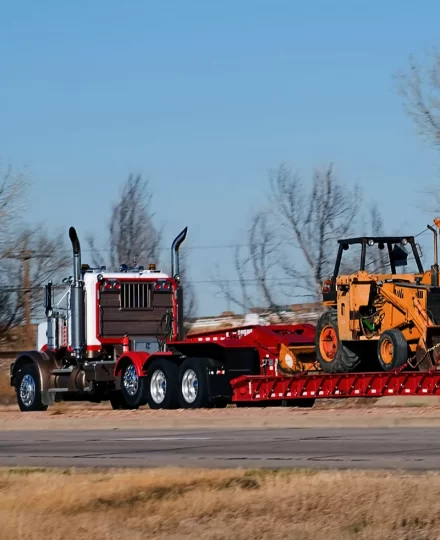
Red heavy-duty semi truck hauling a yellow construction loader on a red lowboy trailer, traveling along a rural roadway with bare trees and open fields under a clear blue sky.
dot-1

Superload or Heavy Haul Trucking for Logistics


Ranking as Canada’s Leader in Flatbed Freight Transportation.

Superload or Heavy Haul Trucking for Logistics integrating the many activities of servicing logistics management in the construction industry.

Paige Logistics aims to be Canada’s 3PL in intermodal transport servicing construction industry logistics.
We are a crucial working partner in supporting the process of planning, implementing, and controlling resources along the supply chain.
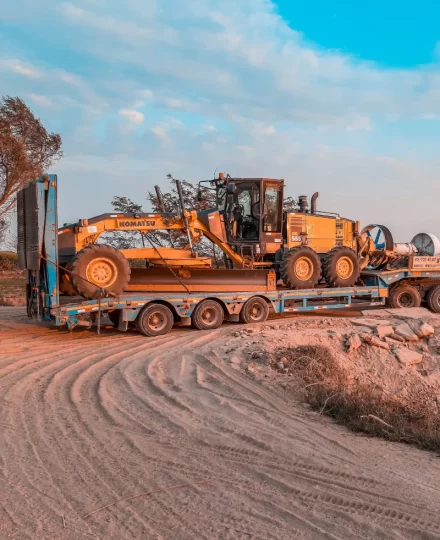

Yellow motor grader secured on a multi-axle flatbed trailer, parked on a dirt construction site with tire tracks, sparse trees, and a partly cloudy sky at golden hour.
dot-1

Our Role in Construction Logistics


The primary responsibility of the construction site logistics manager is the organization of the trucking services logistics company and assigning all the available resources for shipping over-dimensional freight to ensure agreed-upon delivery dates are met.

Responsibilities include:

  • Flatbed LTL & FTL trailer planning, heavy haul logistics, machinery transport, and heavy equipment haulage
  • Site layout planning for safe and efficient movement of personnel, plant, and materials
  • Planning resource use such as scaffolding and Canadian heavy haul trucking companies
  • Organizing site routes, off-loading points, and other activities
  • Ensuring construction and community safety


Construction Logistics in BC, Canada

Construction logistics is the backbone of successful building projects. From transporting heavy equipment to delivering materials on time, efficient logistics ensures smooth operations.

Local providers offer cost-effective options for aggregate delivery, building materials transport, and freight logistics for construction sites.

Oversized equipment delivery, crane transport, and customized solutions for remote sites.

Safe and timely delivery of machinery such as excavators and cranes, with road-to-site solutions for industrial and mining projects.

Green logistics solutions to reduce environmental impact and support sustainability goals.

From Vancouver to Surrey, local companies provide tailored solutions for diverse needs.

logistics icon (5)
dot-1 dot-1
world-globe-orange

Reliable and Secure Transportation

Delivered On Time

support-bg-element-4 support-bg-element-5
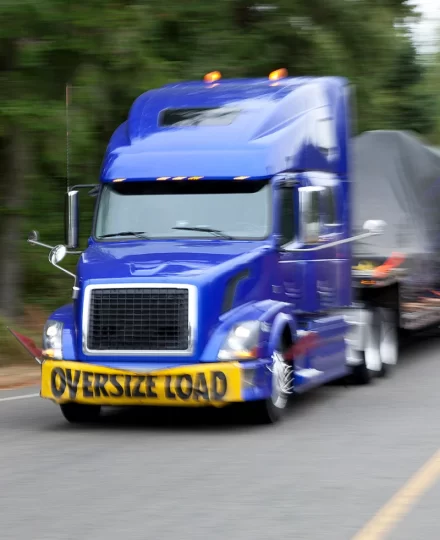
Blue semi-truck with an OVERSIZE LOAD banner mounted on the front, hauling a covered load on a flatbed trailer while driving on a two-lane road bordered by trees, with motion blur indicating movement.
dot-1

Heavy Haul Trucking and Super Load Management


Transporting oversized or heavy loads involves strict regulations that vary between provinces and states. Paige Logistics provides:

  • In-house safety and securement teams
  • Experienced heavy haul drivers
  • Accurate, upfront pricing
  • Specialized trailer selection for different cargo weights and dimensions

Super loads may require special permits, route planning, and coordination with authorities for traffic control, lane restrictions, escort vehicles, and hazard clearance.

Understanding Construction Logistics

Construction logistics refers to the planning, execution, and management of the flow of materials, equipment, and labor to, from, and within a construction site. It includes everything from transportation and storage of materials to the coordination of deliveries, handling, waste management, and site access, ensuring that the construction process is efficient, safe, and timely.

Logistics is critical in construction because it ensures that materials and equipment are delivered to the site on time and in the right quantities. Proper logistics management helps avoid delays, reduces waste, lowers costs, and improves safety on the construction site. It also plays a crucial role in maintaining project schedules and budgets.

The main challenges in construction logistics include managing the delivery and storage of large quantities of materials, dealing with restricted site access, coordinating between multiple suppliers, ensuring timely deliveries, minimizing waste, and adapting to changing project requirements. Traffic management, environmental considerations, and ensuring safety are also significant challenges.

Technology can enhance construction logistics through the use of tools such as Building Information Modeling (BIM), GPS tracking, and logistics software. These tools help with better planning, real-time tracking of materials, improved communication between stakeholders, and the optimization of supply chains. Technology also aids in automating processes, reducing errors, and improving overall project efficiency.

Just-in-time (JIT) deliveries refer to the practice of scheduling material deliveries to arrive exactly when they are needed on-site, rather than storing them for long periods. This approach minimizes the need for large on-site storage areas, reduces waste, and lowers the risk of damage or theft. JIT deliveries require precise planning and coordination to ensure materials are available when needed without causing delays.

Optimizing supply chain management in construction logistics involves streamlining processes to ensure materials are sourced, transported, and delivered efficiently. This includes selecting reliable suppliers, using technology for inventory management, coordinating closely with all stakeholders, and implementing lean construction practices to reduce waste and improve productivity. Effective supply chain management helps keep projects on schedule and within budget.