
Mastering Cold Chain Freight for Successful Shipping
Cold Chain Logistics in Canada: Keep It Fresh, Safe, and On-Time with Paige Logistics
From ensuring vaccines arrive viable to keeping your yogurt shelf-fresh, the cold chain isn’t just about shipping — it’s about delivering trust.
At Paige Logistics, we specialize in end-to-end cold chain solutions that help Canadian businesses maintain product integrity while optimizing operational efficiency.
What Is Cold Chain Logistics?
It refers to the temperature-controlled supply chain required to transport perishable goods safely.
From production to storage to final delivery, every step must be precisely controlled to avoid spoilage, contamination, or degradation.
We move:
- Pharmaceuticals and medical supplies
- Frozen and chilled food products
- Fresh produce
- Dairy and beverages
- Floral and plant shipments
Whether you need -20°C or +20°C conditions, we tailor the solution to your product’s needs.
Why Paige Logistics for Cold Chain Solutions?
We don’t just offer trucks. We deliver accountability, visibility, and peace of mind. Here’s why Paige is your cold chain partner of choice:
1. End-to-End Monitoring
Our reefer units are fitted with IoT sensors and GPS systems, giving you live tracking and real-time temperature logs 24/7.
2. Regulatory Compliance Built In
We comply with Health Canada, CFIA, and FDA requirements for food and pharmaceutical transport. We know what it takes to stay audit-ready.
3. Cross-Border Expertise
Need to ship from Toronto to Texas? We handle customs, documentation, and route planning with ease.
4. Flexible Shipment Options
Whether you’re shipping full truckloads or LTL (Less-than-Truckload), our reefer networks scale with your needs.
5. Reliable Delivery, Guaranteed
We plan for contingencies. Backup units, route alternates, and active monitoring mean no shipment is left to chance.
How Our Cold Chain Process Works
- Pre-Trip Coordination – You’ll work with a dedicated logistics expert to plan your route, temperature needs, and timing.
- Pickup & Pre-Cooling – We dispatch pre-cooled trailers to prevent temperature shock during loading.
- In-Transit Monitoring – Our client portal provides real-time updates on temperature, route, and ETA.
- Arrival Inspection – Upon delivery, we verify temperature logs and confirm shipment integrity.
Everything we do is built around your product’s quality.
Real Results: Pharma Delivery in Sub-Zero Conditions
A pharmaceutical distributor in Montreal needed to deliver sensitive vaccines to multiple remote locations in winter. We ensured consistent temperature control (-2°C) for 72 hours straight, through snowstorms and flight delays. Zero spoilage. Full compliance.
How Cold Chain Logistics Process Works: A Step-by-Step Breakdown
Ensuring the quality of temperature-sensitive shipments requires strategic planning, cutting-edge technology, and adherence to industry regulations. Let’s break it down.
1. Pre-Cooling & Packaging
Before a shipment even leaves the facility, proper pre-cooling is essential. This ensures that goods start their journey at the right temperature. Packaging innovations like vacuum insulation panels and phase change materials help maintain consistent temperatures.
2. Temperature-Controlled Transportation
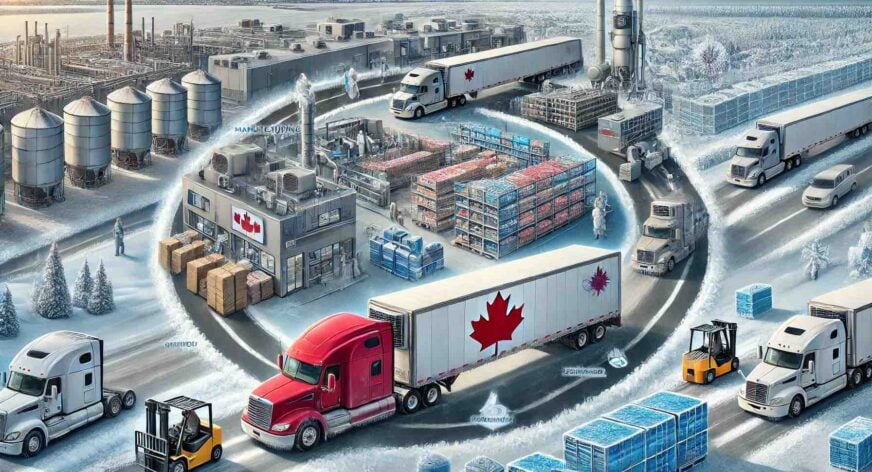
Specialized refrigerated trucks, ocean containers, and air freight ensure seamless transport of perishable goods.
- Refrigerated Trucking (Reefers): Equipped with temperature control systems to keep goods at precise temperatures.
- Air Freight: Ideal for high-value pharmaceuticals and perishables requiring rapid transport.
- Cold Storage Warehousing: Temperature-controlled warehouses act as a buffer between transportation phases.
3. Real-Time Temperature Monitoring
Cold chain has evolved beyond guesswork. IoT-enabled sensors and GPS tracking allow companies to monitor temperature, humidity, and transit conditions in real time. If a temperature spike occurs, automated alerts trigger immediate corrective actions.
4. Regulatory Compliance & Safety Measures
Cold chain isn’t just about keeping items cold—it’s about following stringent regulatory frameworks to avoid costly violations.
- FDA & USDA Regulations ensure food safety compliance.
- Good Distribution Practices (GDP) mandate proper handling of pharmaceutical products.
- Hazard Analysis and Critical Control Points (HACCP) guidelines help prevent contamination.
Biggest Challenges in Cold Chain Logistics (And How to Overcome Them)
While cold chain is critical, it comes with unique challenges. Here’s how to tackle them head-on:
Challenge #1: Temperature Deviations
Even a minor fluctuation can mean disaster. Solution? Implement advanced temperature loggers and predictive analytics to anticipate risks before they occur.
Challenge #2: Cost Management
Maintaining cold storage and refrigerated transport isn’t cheap. Solution? Optimize routes, consolidate shipments, and use energy-efficient refrigeration units to reduce costs.
Challenge #3: Compliance Complexity
Global cold chain operations involve navigating multiple regulations. Solution? Work with certified logistics providers familiar with international compliance requirements.
Why Paige Logistics is Your Trusted Cold Chain Partner
At Paige Logistics, we go beyond basic temperature control—we ensure reliability, efficiency, and compliance across all touchpoints in the cold chain.
Our Competitive Edge:
✅ 24/7 Real-Time Temperature Tracking: Advanced monitoring for total shipment visibility.
✅ Regulatory Compliance Expertise: Fully aligned with FDA, USDA, and HACCP standards.
✅ Customized Cold Chain Solutions: From pharmaceuticals to fresh produce, we tailor logistics strategies to your needs.
✅ Sustainable Practices: Energy-efficient transport and eco-friendly packaging options.
Final Thoughts: How to Future-Proof Your Cold Chain Strategy
Cold chain logistics is evolving rapidly. Staying ahead means leveraging AI-driven route optimization, blockchain for traceability, and smart packaging innovations to enhance efficiency and reduce waste.
Want to ensure seamless temperature-controlled logistics for your business?
Partner with Paige Logistics today.
Understanding Cold Chain Logistics
It refers to the transportation of temperature-sensitive products—such as food, pharmaceuticals, and certain chemicals—through a supply chain that is temperature-controlled from start to finish. This ensures that products like fresh produce, pharmaceuticals, or frozen baked goods are kept at their required temperatures to prevent spoilage or degradation.
Temperature control is crucial because certain products, such as pharmaceuticals, dairy, and seafood, can quickly spoil or lose efficacy if exposed to the wrong temperatures. For example, pharmaceuticals may become ineffective, and perishable foods like vegetables or meat can rot without proper refrigeration. Even a small deviation in temperature can have significant consequences.
Commonly transported items in cold chain logistics include:
- Fresh produce like lettuce, tomatoes, and berries.
- Dairy products such as milk, cheese, and butter.
- Meat and seafood including poultry, beef, and fish.
- Pharmaceuticals, especially temperature-sensitive medications.
- Frozen baked goods like bread, pastries, and cakes.
- Alcoholic beverages such as beer, wine, and spirits.
Different products have specific temperature requirements. Here are some common temperature ranges:
- Fresh produce: 0°C to 4.4°C (32°F to 40°F).
- Pharmaceuticals: Varies, but many need to be kept between 2°C and 8°C (36°F to 46°F).
- Dairy products: Around 4°C (39.2°F).
- Frozen goods: Below -18°C (0°F) to ensure longevity.
- Meat and seafood: For chilled meat, the ideal range is between 0°C and 4°C, while frozen meat requires temperatures below -18°C.
Cold chain logistics increasingly relies on advanced technology to ensure temperature compliance and provide supply chain visibility. IoT (Internet of Things) devices are often used to monitor temperatures in real-time, and blockchain technology can help maintain transparency throughout the supply chain. Logistics automation also plays a significant role in optimizing routes and ensuring timely delivery of goods.
Some of the most significant challenges include:
- Temperature fluctuations: Even a minor fluctuation can damage products like pharmaceuticals or dairy.
- Logistics coordination: Moving goods efficiently while keeping them at the proper temperature requires complex coordination.
- Regulatory compliance: Products like pharmaceuticals need to meet strict regulations to ensure safety and efficacy during transport.
Cold storage warehousing is a key component of cold chain logistics that provides temperature-controlled environments for storing perishable goods like meat, frozen baked goods, and dairy before they are shipped to their final destination. These warehouses can maintain various temperature zones, from chilled to frozen, ensuring that goods are stored properly until needed.
Pharmaceuticals, particularly vaccines and biological products, often need to be kept at very specific temperatures to remain effective. According to industry sources, 7 out of 10 of the top pharmaceuticals in the U.S. require temperature-controlled transport. A minor change in temperature can render these products ineffective, leading to potential health risks and financial losses.