
Technical Guide to Vancouver Flatbed Transport and Heavy Haul Logistics
Vancouver serves as a critical entry point for industrial cargo requiring specialized open-deck transportation. Flatbed trucking provides the necessary infrastructure for moving freight that exceeds the physical dimensions of standard 53-foot dry vans. This method is the primary solution for the construction, forestry, and energy sectors in British Columbia. Unlike LTL shipping, which focuses on consolidated palletized goods, flatbed transport facilitates the movement of oversized, heavy, or irregularly shaped commodities.
Flatbed Equipment and Cargo Securing Standards
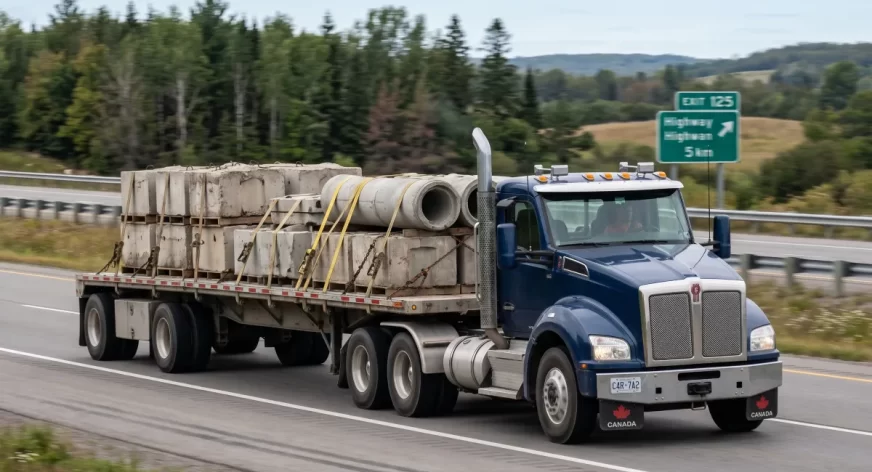
Selecting the appropriate trailer depends on the weight, length, and loading requirements of the cargo. Standard 48-foot and 53-foot flatbeds feature a flush deck that allows for crane loading from above or forklift loading from the side. For taller shipments that exceed standard height clearances, Step Deck trailers (also known as Single-Drop trailers) provide a lower deck height to maintain legal vertical limits.
Every shipment requires specific securing protocols to ensure transit safety.
- Grade-70 Transport Chains: Used for securing heavy machinery, steel coils, and construction equipment to the trailer’s rub rails.
- Nylon Straps with Ratcheting Binders: Utilized for securing lumber, palletized building materials, and lighter industrial goods.
- Specialized Tarping: Heavy-duty vinyl tarps protect moisture-sensitive loads, such as finished wood products or delicate machinery, from Western Canada’s environmental elements.
Navigating Oversized Cargo and Regional Permits
Vancouver’s geographic landscape presents unique challenges for oversized hauls. Transporting “Wide Loads” or “Over-Dimensional” freight requires strict adherence to BC Ministry of Transportation regulations. This includes securing the necessary permits for specific routes like the Massey Tunnel or the Lions Gate Bridge, which have strict height and width restrictions.
Paige Logistics coordinates these technical requirements, including the deployment of pilot cars for escorting loads that exceed 3.2 meters in width. Proactive route planning identifies potential infrastructure bottlenecks before the freight is dispatched. This oversight prevents costly delays at terminal gates and ensures that heavy machinery reaches job sites across the Lower Mainland on schedule.
Industry-Specific Applications for Open Deck Transport
Construction and Infrastructure
The construction industry utilizes flatbed transport for the scheduled delivery of structural steel, pre-cast concrete, and roofing components. Direct delivery to sites without loading docks is a technical necessity for urban development projects.
Energy and Oil & Gas
Moving drilling equipment and pipe sections into Northern BC and the Yukon requires ruggedized flatbed and Trombone trailers capable of extending to accommodate extra-long loads.
Manufacturing and Steel
Manufacturing facilities rely on flatbeds for the transport of raw materials and finished heavy components. Side-loading capabilities allow for the rapid turnaround of steel coils and industrial plates, maintaining production line efficiency.
Strategic Logistics Management
Optimizing flatbed routes in British Columbia involves real-time monitoring of weather conditions and port terminal productivity. Paige Logistics utilizes GPS telematics to provide visibility into shipment location and transit speed. Accurate documentation, including the Bill of Lading and specialized permits, ensures a seamless transition through commercial inspection stations. By focusing on technical compliance and equipment specialization, shippers reduce the risk of insurance claims and unexpected accessorial charges.
Strategic Coordination of Vancouver Flatbed Logistics
Selecting the appropriate flatbed equipment requires a technical understanding of cargo dimensions and regional permitting laws in British Columbia. Paige Logistics manages the coordination of specialized open-deck transport for industrial, construction, and manufacturing sectors. This oversight includes the verification of carrier safety ratings and the procurement of oversized permits for travel through restricted zones in the Lower Mainland. Utilizing professional drayage and long-haul flatbed services ensures that heavy machinery and bulk materials are delivered according to the technical requirements of the job site.
Request a Flatbed Transport Quote
Paige Logistics provides transparent rate structures for domestic and cross-border flatbed shipping. Shippers can utilize the online freight calculator to receive instant estimates based on current line-haul and fuel surcharge data. For oversized or over-dimensional freight requiring pilot cars or specialized trailers like RGNs and Step Decks, direct consultation with a logistics professional ensures accurate route planning. Contact the Vancouver operations team to verify equipment availability and schedule transport for industrial cargo.
Understanding Flatbed Transport
Shippers should use flatbed transport when freight exceeds the physical dimensions of a standard 53-foot dry van or when the cargo is oversized, heavy, or irregularly shaped. Vancouver flatbed transport is commonly used for industrial cargo in the construction, forestry, energy, manufacturing, and steel sectors.
Oversized flatbed cargo in British Columbia requires permits that follow BC Ministry of Transportation regulations. For routes in Vancouver and the Lower Mainland, permits may need to account for restricted infrastructure such as the Massey Tunnel or the Lions Gate Bridge, which have strict height and width restrictions.
Flatbed shipments are secured using cargo-specific methods. Grade-70 transport chains are used for heavy machinery, steel coils, and construction equipment. Nylon straps with ratcheting binders are used for lumber, palletized building materials, and lighter industrial goods. Heavy-duty vinyl tarps are used to protect moisture-sensitive loads such as finished wood products or delicate machinery.
Standard 48-foot and 53-foot flatbeds are used for cargo that can be loaded by crane from above or by forklift from the side. Step Deck trailers, also known as Single-Drop trailers, are used for taller shipments that need a lower deck height to stay within legal vertical limits. The provided content also mentions Trombone trailers, RGNs, and Step Decks for specialized or extra-long loads.
Route planning accounts for infrastructure height restrictions by identifying potential bottlenecks before freight is dispatched. Paige Logistics coordinates technical requirements for oversized and over-dimensional freight, including permits for restricted routes such as the Massey Tunnel and the Lions Gate Bridge. This helps prevent delays at terminal gates and supports scheduled delivery across the Lower Mainland.
Open deck transport in Vancouver is used by the construction, infrastructure, energy, oil and gas, manufacturing, and steel industries. These sectors use flatbed transport for structural steel, pre-cast concrete, roofing components, drilling equipment, pipe sections, raw materials, steel coils, industrial plates, and finished heavy components.